Seafood exposes weaknesses in transport more quickly than almost any other food category. Meat, dairy, and related produce all have margins for error. Seafood does not.
A refrigeration system that is slightly underperforming, a van that struggles to recover temperature after door openings, or a route that runs longer than planned will be more apparent when the load is fish or shellfish. This is why operators in the seafood sector tend to discover transport issues earlier, and more painfully, than those moving other chilled goods.
One key reason is that the shelf life of seafood begins at landing, not at delivery. By the time fish reaches a vehicle, part of its usable life has already gone. Transport does not preserve freshness in the abstract; it either protects what remains or accelerates its loss.
Decisions on vehicle suitability, refrigeration performance, and routing therefore, directly impact quality, yield, and ultimately what reaches the customer in sellable condition.
In practice, this means refrigerated transport is not a background function in seafood businesses. It is part of the product. A well-handled load retains its texture, appearance, and aroma.
A poorly handled one may still arrive on time, but the damage becomes obvious hours later at the counter or during preparation. That is why reliability matters more than speed, branding, or shaving a small amount off running costs. In seafood, transport decisions quietly determine whether a business builds trust or loses it.
Seafood Has No Recovery Window
Unlike many other food products, seafood rarely recovers once temperature control slips. Meat and dairy can often tolerate short deviations without obvious impact. Produce may show gradual deterioration over days. Seafood behaves differently. Even brief temperature excursions accelerate spoilage processes that cannot be reversed.
What operators sometimes underestimate is how quickly this happens. A short delay during loading, a refrigeration unit that is slow to lower temperature after multiple door openings, or a van left idling too long between drops all contribute. Individually, these moments seem minor. Together, they compound. The result is fish that looks acceptable on delivery but deteriorates rapidly afterwards.
This is why poor transport decisions often do not show up immediately. Drivers complete the route, customers sign for the delivery, and everything appears fine. The problem arises later, when fish degrades earlier than expected, shelf life shortens, or customers notice a quality inconsistency. At that point, the transport failure is invisible, but its effects are not.
Seafood operators quickly learn that reliability is about consistency, not perfection. Maintaining proper holding temperature throughout the day, recovering quickly after door openings, and avoiding unnecessary handling are more important than headline specifications.
Once quality is lost, it cannot be added back in the shop or kitchen. Transport either preserves the product’s residual value or quietly erodes it.
Early Starts, Long Days, and Unforgiving Routes
Seafood logistics place unique demands on vehicles and refrigeration systems. Early morning collections are common, often starting well before most other food sectors are active. Market runs add further complexity, with unpredictable dwell times and repeated door openings.
Multi-drop urban routes then extend the working day, particularly for independent fishmongers and local distributors.
These conditions place refrigeration systems under constant stress. Stop-start driving, frequent loading and unloading, and variations in ambient temperature all test a system’s ability to maintain and recover temperature. In day-to-day use, this is where the difference between a robust setup and a marginal one becomes obvious.
Vehicles that perform adequately in other chilled sectors often struggle here. A refrigeration unit that copes well with fewer drops or longer steady runs may fall behind when faced with repeated openings and short hops. Temperature recovery slows, internal airflow is reduced, and products at the rear or near the doors are exposed longer than intended.
From experience, seafood routes need to be tightly controlled. There is little slack in the working day, and little tolerance for equipment that is only just good enough. Reliability is not about theoretical capability but about how systems behave under pressure, hour after hour, in real operating conditions. This is particularly true if you manage a large fleet of refrigerated vans.
Why Seafood Transport Failures Are More Costly
When transport fails in seafood, the cost is rarely limited to the product in the van. Lost product hurts, but lost trust hurts more. A failed delivery in this sector typically results in the entire load being rejected, not partially accepted. Customers do not have the luxury of working around quality issues when freshness is critical.
The consequences escalate quickly. Customers may switch suppliers without warning. Long-standing relationships can be reviewed or quietly ended after a single failure. In contract supply, one poor delivery is often enough to trigger scrutiny of the entire operation.
There are also hidden costs that operators consistently underestimate. Disposal of spoiled seafood is expensive and time-consuming. Lost margin is rarely recoverable. Reputation damage spreads quickly in a sector where buyers talk to one another, and reliability is valued above almost everything else.
The phrase “we’ve never had a problem before” is not a strategy in seafood transport. It usually means the business has been fortunate rather than protected. Because failures surface late and indirectly, they are often blamed on handling or demand rather than transport. In reality, unreliable refrigerated transport is one of the fastest ways to undermine an otherwise well-run seafood operation.
SMALL OPERATORS FEEL TRANSPORT FAILURES FIRST
For small seafood businesses, transport failures are felt immediately and personally. One-van operations and owner-operators lack spare capacity to fall back on. When the van goes down, the company effectively stops. There is no alternative route, no spare vehicle, and often no buffer stock to absorb the disruption. In these cases, the refrigerated van is not just part of the operation, it is the operation.
Breakdowns hit independent fishmongers and small distributors harder because margins for error are so small. A missed market run or failed delivery does not just affect that day’s revenue; it can undermine relationships that have taken years to build. Customers buying fresh fish expect reliability as a given. When it is missing, even once, confidence drops quickly.
At the same time, small operators are under constant pressure to balance cost, reliability, and compliance. Investing heavily in a vehicle can feel risky, particularly when volumes fluctuate or seasonal demand dominates. Cutting corners, however, often proves more expensive in the long run. Older vehicles, marginal refrigeration systems, or poorly suited vans tend to fail at the worst possible moment.
This is why many small seafood businesses rely on hiring, even if that was not the original plan. Hire provides flexibility, reduces exposure to unexpected repair costs, and allows operators to access reliable vehicles without tying up capital. Used properly, it becomes a risk management tool rather than a stopgap, helping independents stay operational when they can least afford disruption.
Scale Does Not Remove Risk for Larger Seafood Distributors
Larger seafood distributors may operate multiple vehicles, but scale does not remove risk. It simply changes where that risk sits. Bigger fleets still struggle with consistency, uptime, and standardisation, particularly when growth has happened quickly or organically.
Mixed fleets are common, often comprising vehicles of different ages, specifications, and refrigeration systems. This creates variability in performance that is difficult to manage day-to-day. One van may recover temperature quickly after a drop, another may not. Drivers adapt their behaviour to the vehicle they are in, which introduces inconsistency across the operation.
The variety of routes and customers compounds the challenge. A single vehicle failure can disrupt multiple downstream deliveries, affecting wholesalers, restaurants, and retailers in one chain reaction. Unlike other food sectors, seafood does not lend itself to easy redistribution once something goes wrong. Loads cannot simply be held or reallocated without quality loss.
This is why contingency planning is critical in seafood distribution. Larger operators that perform well tend to plan for failure rather than assuming scale will protect them. That often means access to additional vehicles, flexible hire arrangements, and a clear understanding of which routes are most critical. Size provides options, but only if those options have been planned in advance.
Refrigerated Vehicles for Seafood Are Not Generic
Seafood transport places specific demands on refrigerated vehicles that are often underestimated. On paper, many vehicles appear suitable. In practice, small details make a significant difference.
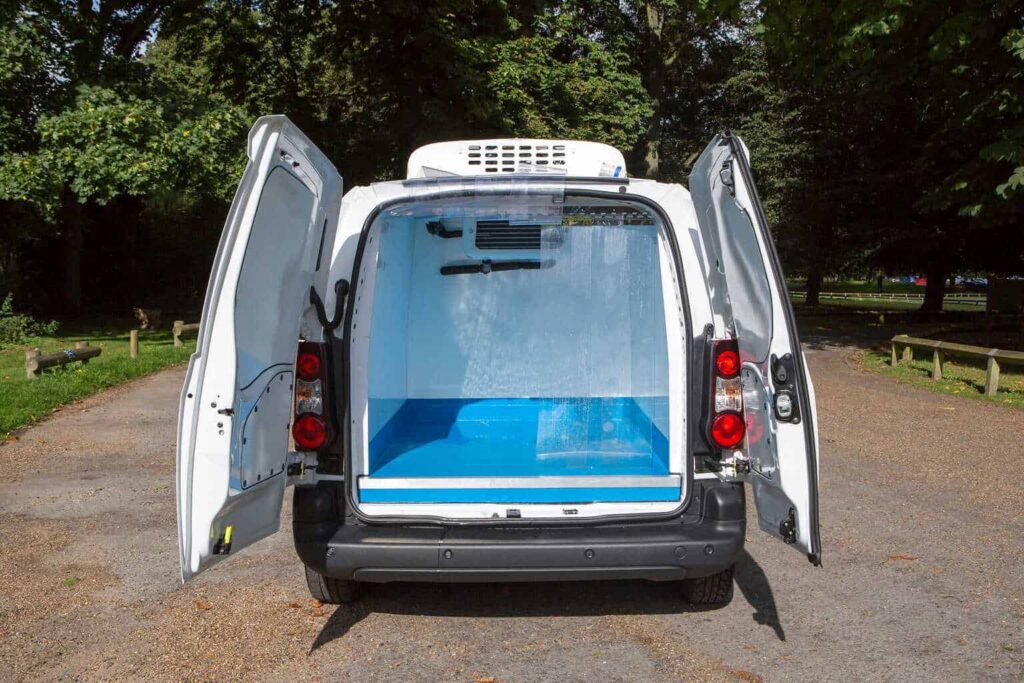
Payload is one of the first issues. Ice, boxes, and refrigeration equipment all reduce usable capacity. Vehicles specified too tightly may technically comply, but they leave little room for variation. Overloading becomes a temptation, and performance suffers as a result. Braking, fuel consumption, and refrigeration efficiency are all affected.
Internal layout and airflow matter more than many operators expect. Poor airflow leads to uneven temperatures, particularly near doors or at the rear of the load space. In seafood delivery, that inconsistency shows up quickly in product quality. Ease of cleaning is another critical factor. Vehicles that are difficult to clean properly increase the risk of hygiene issues and downtime between runs.
This is where the distinction between “technically compliant” and “operationally suitable” becomes clear. A vehicle may meet regulatory requirements but still perform poorly under real seafood delivery conditions. Over time, poor vehicle choice quietly increases waste, shortens shelf life, and erodes margins without ever appearing as a single obvious failure.
The Role of Hire in Managing Seafood Businesses
Seafood businesses tend to hire differently from other food sectors. Demand is often tied to landings, weather, and market conditions rather than predictable seasonal peaks. That makes flexibility essential.
Hire is commonly used to manage:
- Seasonal increases in volume
- Sudden market surges
- Planned maintenance or unexpected vehicle downtime
The risk comes when hiring is left too late. Last-minute arrangements limit choice and increase costs, and the supplied vehicle may not be ideally suited to the job. In seafood, that mismatch can have immediate consequences.
Working with a specialist refrigerated-hire provider is more critical in this sector because the margin for error is smaller. Vehicles need to be ready for intensive use from day one. Refrigeration performance, hygiene standards, and payload suitability must all be met. When used appropriately, hiring becomes a strategic tool that reduces exposure to failure rather than a reactive fix when something goes wrong.
Electric Refrigerated Vans and Seafood
Electric refrigerated vans offer potential benefits for some seafood operators, but their limitations quickly become apparent in this sector. Where routes are short, predictable, and urban, they can work well. Quiet operation and lower running costs are genuine advantages in the right conditions.
However, seafood routes often involve early starts, long days, and variable dwell times. Refrigeration load significantly reduces range, particularly in colder weather. Charging windows can be challenging to manage when vehicles return late and need to be ready again early the next morning.
Because seafood delivery is so demanding, EV limitations tend to appear earlier than in other sectors. This makes realistic trials essential. Assumptions based on headline range figures rarely hold up. Operators who test properly under real-world conditions are far more likely to deploy electric vehicles successfully where they make sense and avoid problems where they do not.
Why Reliability Matters More Than Saving a Few Pence Per Mile
Cutting corners on transport often looks attractive in the short term, but it is usually a false economy in seafood. A single failed delivery or rejected load quickly erodes small per-mile savings.
Reliability protects the margin more effectively than cost reduction. Consistent performance reduces waste, stabilises customer relationships, and lowers the likelihood of emergency fixes. Dependable transport also underpins trust. Buyers who receive consistent quality are less price-sensitive and more likely to commit to long-term relationships.
In seafood delivery, predictability has real commercial value. Knowing that deliveries will arrive in the right condition every time allows businesses to plan with confidence. That confidence is worth far more than marginal savings from compromising vehicle reliability.
In Seafood, Transport is Part of the Product
Seafood businesses cannot separate product quality from transport quality. The condition in which fish produce arrives is shaped as much by the journey as by the handling at source. Reliable refrigerated transport preserves shelf life, maintains yield, and supports a consistent customer experience.
Operators who prioritise reliable vehicles hold a clear advantage. They experience fewer disruptions, lower waste, and stronger relationships. Properly planning transport is not an operational detail; it is a competitive decision.
In the seafood industry, refrigerated vehicles should be treated as critical infrastructure, not a background cost. Businesses that recognise this early tend to operate with greater resilience and stability. Those who do not learn the lesson often do so later, when the cost of failure is much higher.