In laboratories and diagnostics, most attention is rightly focused on what happens inside the lab. Equipment calibration, testing accuracy, turnaround times, and reporting standards all receive close scrutiny. What often receives far less attention is what happens before samples ever reach the bench.
From the perspective of someone working day to day with temperature-controlled vehicles across diagnostics, environmental testing, veterinary labs, and research facilities, the transport stage is where many avoidable problems begin. Not because people are careless, but because the journey itself is poorly understood, under-specified, or treated as a background task rather than a critical part of the diagnostic process.
The reality is that sample transport is not a neutral step. It actively affects integrity, reliability, compliance, and cost. The hidden journey matters because once a sample is compromised, everything downstream is built on weakened foundations.
Transport is Part of the Diagnostic Process
It is common to see transport described as a handover point. Sample collected, sample transported, sample tested. In practice, transport is not a clean boundary. It is an extension of the collection environment.
Temperature, time, vibration, light exposure, and handling conditions during transport all influence sample stability. In some cases, the tolerance is narrow. In others, it is wider but still finite. What matters operationally is that transport conditions are controlled, repeatable, and defensible.
We see this underestimated most often in organisations where transport has historically been simple. A small local lab, a tight collection radius, and familiar routes create a sense of safety. When volumes grow or networks expand, that sense of control disappears very quickly.
The Moment Samples Leave Controlled Environments, Risk Increases
Collection environments are usually well managed. Protocols are clear. Storage is appropriate. Staff understand the importance of handling. Once samples leave those environments, the chain of control often weakens.
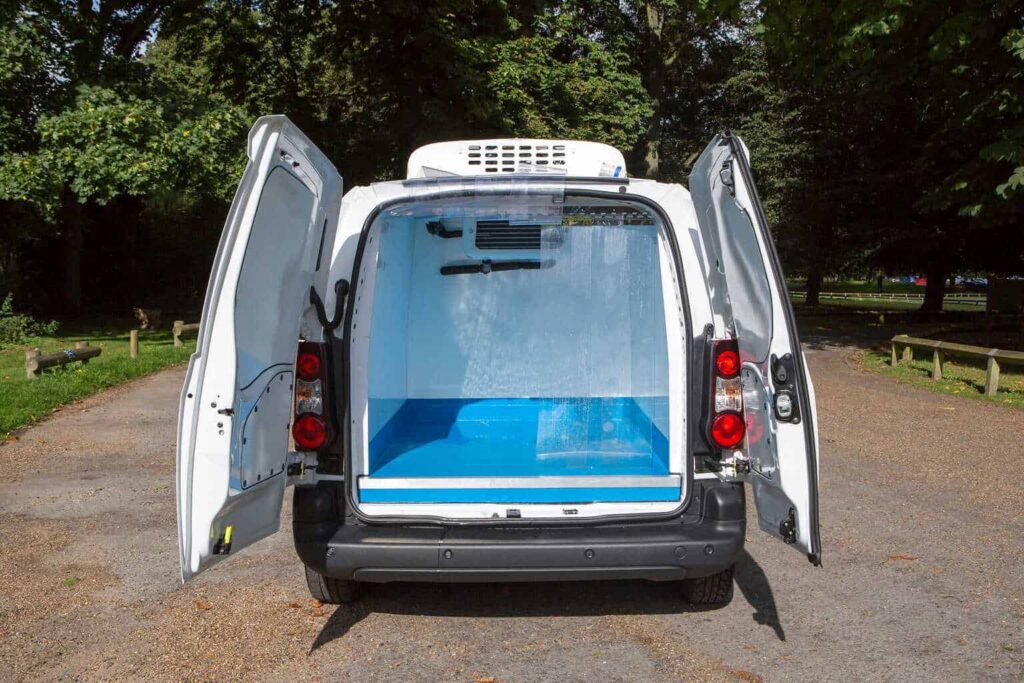
In day-to-day fleet use, we see samples placed into vehicles that are technically temperature-controlled but operationally inconsistent. Vans are shared with other work. Loads are mixed. Doors are opened repeatedly. Vehicles idle in traffic or wait outside facilities longer than expected.
None of this is dramatic in isolation. Collectively, it creates conditions that can undermine sample integrity without triggering obvious alarms.
Operators usually underestimate how much time samples spend outside ideal conditions even when everything appears to be working.
Temperature Stability Matters More Than Headline Settings
Most professionals understand the required temperature ranges for their samples. What is less appreciated is how difficult it can be to maintain stable temperatures in real-world transport.
Refrigeration units are rated under specific conditions. Real routes include stop-start driving, repeated door openings, partial loads, and varying ambient temperatures. A unit may technically hold temperature, but stability within the load space can vary significantly.
We see this fail most often with small-volume routes where operators assume the refrigeration load is minimal. In practice, small loads recover temperature more slowly after door openings because there is less thermal mass. Samples near doors or airflow paths experience greater fluctuation.
The issue is rarely a total loss of temperature. It is subtle drift and repeated micro-excursions that shorten viable testing windows.
Time is a Hidden Variable That Compounds Risk
Diagnostics transport is time-sensitive, even when samples are stable at the correct temperature. Extended transit times increase exposure to cumulative stress.
Route efficiency matters. So does predictability. A route that normally takes an hour but occasionally takes three introduces uncertainty that is difficult to manage downstream. Lab scheduling, staffing, and equipment utilisation all depend on reliable arrivals.
We often see transport planned around nominal journey times rather than worst-case scenarios. Traffic, site access delays, and collection overruns quickly erode buffers.
From an operational standpoint, consistency is often more valuable than raw speed.
Multi-Site Networks Introduce Complexity Very Quickly
As diagnostic networks grow, transport complexity increases non-linearly. Adding sites does not just add distance. It adds variability.
Different collection points operate at different paces. Access arrangements vary. Some sites prioritise speed, others thoroughness. When samples from multiple sites converge into a single transport route, the weakest link affects the whole chain.
In day-to-day operations, this often results in vehicles waiting with doors open, samples sitting longer than planned, or routes being re-sequenced on the fly.
Operators often underestimate the impact of small operational decisions on temperature control and traceability.
Compliance Failures are Often Procedural
When compliance issues arise in diagnostic transport, the root cause is rarely equipment failure. More often, it is procedural drift.
Temperature logs are not completed consistently. Alarms acknowledged but not investigated. Deviations noted but not escalated. Over time, these gaps accumulate.
We see this most often during periods of growth or staff turnover. Informal knowledge that once kept things running is no longer shared consistently. New drivers or collection staff are not fully briefed on why certain steps matter.
From an audit perspective, transport becomes difficult to defend, not because it failed catastrophically, but because it cannot be evidenced clearly.
Uptime Matters Because Samples Do Not Wait
Diagnostic samples do not tolerate missed collections or vehicle downtime gracefully. A vehicle off the road can invalidate an entire day’s work across multiple sites.
In quieter operations, a missed run may be recoverable. In high-volume or time-critical diagnostics, it often is not. Samples expire. Retests are required. Clients lose confidence.
We see operators accept levels of vehicle risk that would be unacceptable elsewhere because transport is seen as secondary. That perception changes very quickly after one serious disruption.
Preventative maintenance, access to replacement vehicles, and realistic fleet planning matter more in diagnostics than in many other sectors.
Mixed-Use Vehicles Create Hidden Exposure
One of the most common risk factors we see is mixed-use vehicles. Vans that carry diagnostic samples in the morning and other goods in the afternoon. Vehicles that are cleaned but not controlled. Refrigeration units that are used intermittently.
On paper, this can appear efficient. In practice, it introduces variability. Different loading patterns affect airflow. Different door-opening behaviours affect recovery. Different users treat the equipment differently.
Consistency is difficult to achieve when vehicles are not dedicated to a specific purpose. For sensitive diagnostics work, that inconsistency is often the biggest hidden risk.
Human Factors Matter More Under Pressure
Transport systems are designed by people and operated by people. Under pressure, behaviour changes.
During busy periods, drivers prioritise keeping routes moving. Doors stay open longer. Temperature checks are rushed. Alarms are dismissed as nuisances rather than investigated.
This is not negligence. It is a predictable response to operational stress. Systems that rely on perfect behaviour will fail under pressure.
We see better outcomes where vehicles and processes are designed to reduce reliance on constant vigilance. Clear layouts, reliable monitoring, and realistic schedules reduce the opportunity for error.
Data Exists, But it is Not Always Used Well
Many diagnostic transport operations collect temperature data. Far fewer use it proactively.
Logs are reviewed after the fact or only when something goes wrong. Trends are missed. Repeated borderline excursions are accepted as normal.
In our experience, the value of data lies in pattern recognition rather than exception reporting. Identifying routes that consistently struggle, vehicles that recover slowly, or times of day where issues cluster allows corrective action before failure occurs.
Without that analysis, data becomes a compliance exercise rather than an operational tool.
The Cost of Failure is Higher Than it Appears
When transport compromises diagnostic samples, the immediate cost is often retesting. The real cost is usually higher.
Staff time is wasted. Lab capacity is misused. Client confidence is damaged. In regulated environments, questions may be raised about historical results.
These costs are rarely fully captured in transport budgets, leading to underinvestment in preventive measures. From a business perspective, transport failures are often one of the most expensive hidden costs in diagnostics.
Growth Exposes Assumptions That Once Held True
Many diagnostic operations start small and local. Transport works because the system is simple. As the scale increases, those assumptions break.
Longer routes, more sites, higher volumes, and tighter turnaround times all add strain. What once relied on familiarity now requires structure.
We see the most difficulty where growth is rapid and transport processes lag behind operational reality. Vehicles that were adequate become limiting. Informal processes become brittle.
Recognising this transition early is key to maintaining control.
Specialist Transport Understanding Makes a Difference
Temperature-sensitive diagnostics transport is not the same as general chilled delivery. The tolerance for deviation is lower. The consequences are different.
Operators who work with people who understand those differences tend to encounter fewer surprises. Vehicle specification, monitoring, and response planning all benefit from experience.
This is not about complexity for its own sake. It is about aligning transport capability with the actual risk profile of the samples being moved.
Learning From Where Things Fail Most Often
Across diagnostics transport, failures tend to cluster around the same points: prolonged door openings, poorly sequenced routes, inconsistent monitoring, and over-reliance on informal knowledge.
These are not exotic problems. They are operational realities. Addressing them does not require radical change, but it does require acknowledging that transport is part of the diagnostic chain, not a neutral conduit.
Final Thoughts From the Transport Side
The journey diagnostic samples take is largely invisible to those focused on analysis and reporting. Yet it has a direct impact on reliability, compliance, and trust.
From the refrigerated vehicle side, the message is consistent. Control during transport matters. Stability matters. Evidence matters. What happens between collection and analysis is not a gap to be bridged, but a process to be managed.
Organisations that recognise this early build systems that scale, withstand pressure, and stand up to scrutiny. Those that do not often discover the importance of the hidden journey only after something goes wrong.
Why Partnering with FridgeXpress Supports Reliable Diagnostic Transport
For laboratories and diagnostic networks, transport is not a peripheral service. It is part of the integrity chain. That is where working with a specialist refrigerated provider makes a practical difference.
From our side, we work with temperature-sensitive operations where consistency matters more than speed and evidence matters more than assumptions. Diagnostic samples bring very different risks compared to general food distribution, and vehicles need to behave predictably under repeated door openings, short runs, and variable dwell times.
A partnership approach means vehicles are specified for the actual work being done, not just headline temperature ranges. It also means realistic conversations about route structure, monitoring, and where existing setups are likely to struggle as volumes or networks grow.
When issues arise, response time matters. Samples cannot wait for convenient repair windows or generic solutions. Access to suitable refrigerated vehicles and specialist support reduces disruption and protects downstream testing schedules.